
San Francisco Board Sailing Association’s State of Recreational Access to The San Francisco Bay 2025 Annual Site Access Audit
Introduction 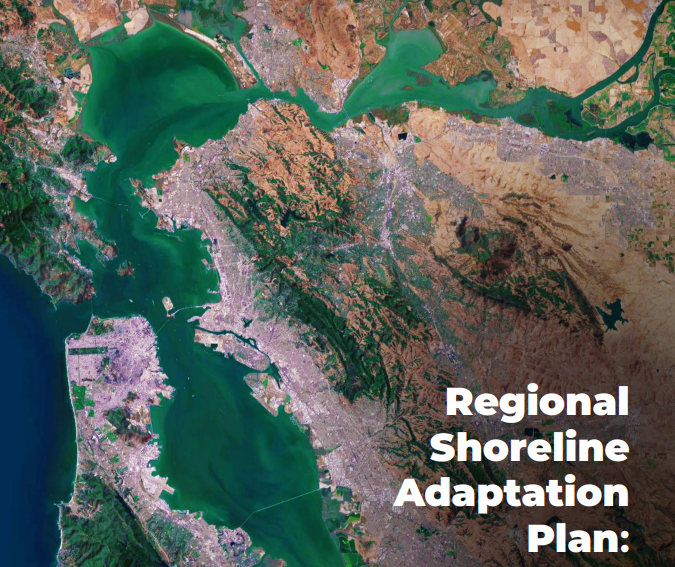
The San Francisco Bay offers the best wind conditions for boardsailing of any major city in the United States and the extraordinary experience of sailing under the Golden Gate Bridge attracts boardsailors from around the world. In addition to the steady growth in our sport, Covid introduced thousands of swimmers to the joy of our open waters and attracted hoards to the shoreline to simply wade, escape the heat and enjoy the solace of the bay.
Our shoreline parks have never been in higher demand nor more fundamentally necessary to our urban populations.
And this trend will only grow as our temperatures rise. While access to the bay in any form is critical, there are a limited number of locations that offer access to water with consistent wind. With 400 miles of available shoreline, only 4 launches account for access to windy waters for the majority of our roughly 5,000 local boardsailors.
Boardsailors operate in a fragile recreational ecosystem, in which the closure of one site affects the entire network of launches. Imagine if one or all of our keystone sites—like Alameda, 3rd Avenue, Berkeley or Sherman—were to disappear? These sites serve thousands of boardsailors and act not only as popular boardsport launches, but as regional access sites for a variety of recreational users. And the possibility of these sites being deeply compromised or lost is not alarmist: every single one of our launches currently faces very real threats from erosion and development. To protect not only our sport, but to preserve the experience that shoreline recreation offers all who enjoy our bay, we must maintain our existing launches by embedding access into new shoreline design models while developing new sites to accommodate growing demand to access the bay.
The purpose of this document is to provide an annual overview of the status of access for boardsailors around the bay, highlight where access for our community is closed or threatened, explain the dynamics threatening access and note priorities to address these threats. Our 2025 Access Audit focusses on critical threats to the following shoreline access sites: Toll Plaza/Radio Beach, Berkeley Marina, Crown Beach Alameda, 3rd Avenue/ Baywinds Park, Candlestick Park, Coyote Point and San Quentin/Windsurfer Beach.
Critical Access Issues
Toll Plaza/Radio Beach
Site Status: CLOSED!
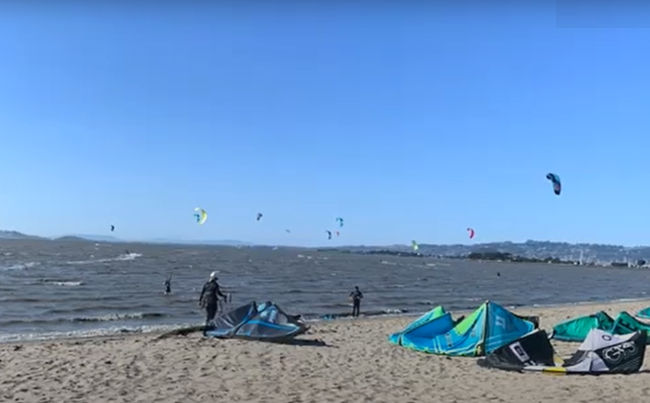
Site Overview: Toll Plaza (aka Radio Beach) is under the jurisdiction of the Port Authority of Oakland. This site is Oakland!s only windward beach and provides an easy point of access for users from both the East Bay and San Francisco. The site is also known for its good early season winds, relatively flat waters and its access to northerly winds. It was also a popular beach for fishing, dog walking and relaxing. It was not uncommon to see more than 30 kiters on the water and more than 80 people using the site at the same time.
The BCDC recently imposed fines on the city of Oakland for failing to remove the unhoused community which was restricting access there, the Port, rather than manage the land more effectively and support continued access, decided to close access to the site by placing a gate over the only access road to the beach.
Jurisdiction of this area is also complicated, with CalTrans, the EBRPD, the City of Oakland and the Port Authority all having had some form of jurisdiction over areas near or on the shoreline in the past 10 years. While the shoreline owned by the Port Authority is subject to BCDC regulation, the access road between the freeway and the shoreline is outside of BCDC oversight, so the gate closure that prevents access to the shoreline does not violate any access rights—technically. The SFBA is in dialogue with Kristi McKenney, the Executive Director of the Port Authority, to explore reopening access for recreational use.
SFBA Actions To Date: The SFBA sent various emails to officials at the Port, but we have been unable to get a response, let alone engage with the Port constructively. The SFBA will petition the Board of the Port at their 4.24.25 meeting to reopen the site.
In addition to the current closure of the site, Toll Plaza and the neighboring marsh are threatened by sea level rise. Although the SFBA has engaged with the MTC and the consulting firm, co:census (who is conducting community outreach to inform shoreline design of the Emeryville Crescent), and is working to develop a design plan to preserve the beach and adjacent shoreline. The SFBA has notified the BCDC of the issue and is awaiting guidance on how to proceed.
2025 Priority Recommendations:
- Coordinate with the Port of Oakland and relevant partners to reopen access to the beach
Berkeley
Site Status: Compromised and Threatened
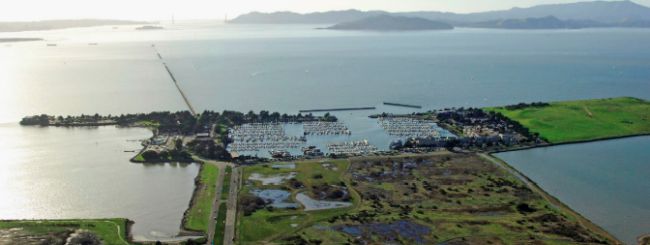
Site Overview: Berkeley faces immediate and long term access issues. The entire Waterfront Park is threatened by the city’s Waterfront Specific Plan to build a large ferry terminal at the site of the old Berkeley Pier. In addition to the disruption that a large ferry will have on recreational water use in the surrounding area, parking for ferry commuters will consume all available parking spaces necessary for recreational users to access the South Basin and the launch at His Lord Ships. The city is working hard at the local and state level to avoid regulatory oversight and clear land use restrictions that would block this project. On the state level, the Bay Area Council and Scott Wiener have developed legislation, SB 71, that would exempt most ferry terminals from CEQA. On a local level, the city has engaged local bike groups to support their project as a ‘recreational enhancement’ to the marina and shoreline access while they present suspect parking and financial data to the public and side-step very real concerns about the financial viability and recreational impact of this project on the Waterfront Park.
SFBA Actions to Date: The SFBA helped build a coalition of residents, business groups and recreational users to hold the city accountable and prioritize recreational use at the site. The city was originally permitted by the BCDC to fill the bay to create the Waterfront Park as a regional recreational resource. The city has a responsibility to ensure continued recreational access to the Waterfront and, as part of its permit, maintain the recreational facilities at the park. Rather than maintain the park, the city has systematically siphoned funds out of the Marina and allowed critical facilities to fail. The Berkeley Pier was closed due to structural issues in 2015 and never re-opened; multiple docks inside the Berkeley Marina have failed and repairs have been slow or continually delayed; recreational users have been prevented from parking in public lots; and most recently, the East Dock in the South Basin failed due to lack of maintenance and the city has closed the dock to hundreds of swimmers and other recreational users who rely on this dock for access to the bay.
The closure of East Dock in the Marina due to lack of maintenance is part of the city’s history of neglect of this critical regional recreational resource. As of April 14, 2025 the city is now claiming that it does not have the budget to cover the $200,000 in repairs (email from City Council Member, Terry Taplin), despite a recent increase in the parks tax through Measure Y intended to provide $1.5M in funds for maintenance of the marina. Rather than allocate these funds to repair East Dock, however, the City has ‘loaned’ the money to the marina to cover repairs. Events in Berkeley are part of a troubling trend the SFBA is witnessing: Although the public continues to show strong support (in the form of bond measures) for public parks, municipalities are increasingly treating parks as commercial opportunities for revenue and development, and working hard to circumvent the regulatory.
2025 Priority Recommendations:
- Continue to engage the City of Berkeley
- Continue to engage and inform the BCDC’s DRB
- Continue to expand coalition of recreational users
- Continue to inform the citizens of Berkeley of the real costs and impact of the WSP on access to the Waterfront Park
Treasure Island
Site Status: Compromised and Threatened

Site Overview: On the heels of Berkeley, there is no threat to our access that more blatantly challenges the relevance of contractual agreements and regulatory authority than the efforts by the City of San Francisco to develop Treasure Island: The State Lands Commission entered into a settlement agreement with the City of San Francisco that would provide a clear source of title for residential development on some of the filled lands. Without such a settlement, the city could not approve residential development, and developers would not be able to provide title insurance. That agreement made it clear that the settlement was in exchange for the remainder of Treasure Island being devoted to public trust purposes, and mostly recreation, for the general public. San Francisco made clear commitments in their final EIR that existing uses and visitors to the island would not be charged a toll to visit their land. The City of San Francisco, through the Treasure Island Development Authority (TIDA), is working with the developer to make the recreational portion of the island resemble a private park instead of one for the general public. The city has proposed a massive toll to both access and exit the island and proposed designs that fail to guarantee the recreational access required by the State Land Grant and the BCDC permit. The city is seeking to offload various financial obligations to upgrade facilities while the lengthy and disruptive construction process is compromising and prohibiting the ability of businesses and service organizations to operate.
Treasure Island is an increasingly important and popular launch. In addition to a dedicated crew of windsurfers, the advent and growth of winging has made the world-class winds at this site accessible to former kiters who now wing. Although reserved exclusively for advanced boardsailors, the winds and swell are arguably the best in the Bay. And as heat bubbles increasingly form around our shoreline, this island launch is becoming one of the more reliable and desirable sites.
SFBA Actions To Date: The SFBA has partnered with the Treasure Island Organizing Committee (TIOC) to hold the city accountable to its obligations to the recreational community there. We are working closely with the BCDC to ensure they are aware of both proposed design violations and daily access disruptions caused by development and the unresponsive Treasure Island Development Authority (TIDA) responsible for managing the development process on the island. In addition to the agreement to incorporate easy and improved access to launches on the NE and NW sides of the island, we are following the following potential access violations that reflect a culture of disinterest in public and recreational access to the shoreline by TIDA:
- Restricted access to NE boat ramp—the main launch for boardsailors—due to gate closure on the primary access road;
- Closure of the TI Sailing center due, in large part, to compromised access caused by construction (the Sailing Center provided critical programs for youth sailing);
- Failure to maintain the Marina has resulted in multiple dock failures during recent storms and OSHA hazards on remaining docks. Dock failure here forced a critical boardsport instructor, ‘Kite the Bay’, to relocate to the East Bay;
- Closure of public access to western Bay front from the Ferry terminal to Mersea restaurant for more than two years due to construction;
- Limited public access and limited parking for public access to Clipper Cove. 2025 Priority Recommendations:
- Continue to engage and inform the BCDC’s DRB
- Continue to engage TIDA and the SF Board of Supervisors
- Continue to expand our community coalition with the TIOC
- Continue to engage our boardsport community
Alameda/Crown Beach
Site Status: Compromised and Threatened

Site Overview: Crown Beach Alameda is a unique locale for beginning wind sports enthusiasts due to the lighter winds, 2 mile long sandy beach, and shallow warmer water. It is arguably one of the best beginner spots in the USA, and protecting access is protecting participation in these sports in the greater Bay Area. The combined King Tide and storm surge on December 14th/15th, 2024 decimated the beach and the resulting erosion threatened the pump station near the Bay Trail. In response, the EBRPD received an emergency permit from the BCDC to drop additional rip rap in front of, to the south and to the north of the Boardsports concession facility. The rip rap prohibits access in this area and forces users to enter through what has previously been the rigging area to the north of the shack. A sand access ramp has been cleared just north of the picnic/rigging area, but this is a very temporary and fragile solution. Boardsports has asked to install a cinderblock ramp similar to the one at Coyote Point to ensure safe ingress and egress near the concession facility to allow boardsports lesson and rental customers as well as public sports recreational users and swimmers to easily access the water.
In addition to this emergency situation, there is a longer term threat posed by recurring and increasingly extreme erosion. The EBRPD does not have a clear path forward to redesign the shoreline to protect this critical recreational resource, however. What makes this site so unique is the extended beach, which acts as a soft and safe landing for beginners. Any solutions that deviates from this design could have a catastrophic impact on our ability to provide a safe introduction to boardsports in the bay.
SFBA Actions To Date:
The SFBA has notified the BCDC of the impact of rip rap on access and is exploring viable ramp designs to ensure interim access to the water. The SFBA is also working through
Boardsports with the EBRPD to preserve access while longer term solutions are developed (thank you to EBRPD’s Jeff Manley (Shoreline Unit Manager), Tiffany Margulici (Business Services Manager) and Dave Mecchi (Crown Supervisor)). Crown Beach is also a priority site in the SFBA’s efforts to craft resilient shoreline plans for our critical launches.
2025 Priority Recommendations:
- Continue to engage the EBRPD to ensure access through and around rip rap • Continue to engage the BCDC to ensure access at this critical site
- Develop resilient shoreline plan to preserve this site
3rd Avenue
Site Status: Open 
Site Overview: Damage to the golf course bordering Baywinds Park closed access to the launch. Local users and the SFBA have been working with Foster City and the golf course to coordinate repairs and restore temporary access to the site. We want to thank the City of Foster City and their hard working Parks Manager, Frank Fanara, who collaborated with the SFBA and other recreational stakeholders to provide temporary alternative access to
3rd Avenue. This site is a major launch for our community and the primary access point for boardsport users on the peninsula and is one of the four pillars of access to windy waters in the San Francisco Bay.
SFBA Actions To Date: The SFBA’s efforts to move forward with a shoreline restoration plan have been slow due to turn-over and competing priorities within Foster City’s government. However, we are pleased to announce that we soon plan to begin work on a study that will evaluate the feasibility of a resilient shoreline here. Once this study has been completed, we will then begin working with the City to implement a long term solution to the erosion issues.
2025 Priority Recommendations:
- Continue to engage the City of Foster City to develop a resilient shoreline plan to preserve this critical launch
Candlestick
Site Status: Compromised and Threatened.
Site Overview: Candlestick has been compromised by a combination of issues: the city of San Francisco relocated many vehicles parked on city streets to the park during Covid and these vehicles occupied most of the available street parking near the launch. The park also restricted access by closing the park entrance at 7pm and various flooding issues have further restricted access.
FBA Actions To Date: The SFBA’s Elena Ufimtseva has been working with the local community and representing boardsport interests there for years to make sure that the State Parks improve all aspects of our access as they move forward with shoreline and park upgrades. The SFBA has also partnered with the Hunters Point Alliance to advocate for improved access for all users of the park.
2025 Priority Recommendations:
- Continue to engage the district Supervisor
- Continue to engage build the neighborhood alliance with Hunters Point Alliance • Continue to engage Phil Ginsberg and the State Parks Commission
- Continue to inform the BDCD of developments that compromise access at this shoreline park
Coyote Point
Site Status: Compromised and Threatened

Site Overview: Once a major launch for windsurfers, Coyote’s wind conditions and general access were damaged years ago when the construction of the Facebook building caused wind turbulence and then shoreline development to abate sea level rise resulted in an armored shoreline. Now, a new development project in Brisbane further threatens the viability of this once-storied launch: https://www.brisbaneca.org/media/45696. Local boardsailors petitioned the city to consider mitigating the impact on wind of this development as far back as 2013 (http://www.keepitwindy.org/) and submitted various recommendations to limit additional wind turbulence. The most recent proposal by the city of Brisbane shows building heights and locations that would further degrade wind quality, but the EIR makes no mention of impacts on wind in it design and environmental impact considerations.
SFBA Actions To Date: The SFBA has raised these concerns with the City of Brisbane and has notified the BCDC of the threat to access posed by construction.
2025 Priority Recommendations:
- Continue to advocate for design review with the City of Brisbane
- Continue to advocate for design review with the BCDC
- Continue to engage and mobilize recreational users at this site
San Quentin/Windsurfer Beach
Site Status: Compromised

Site Overview: Windsurfer Beach is one of the first boardsport launches in the bay and has been in continual use since the mid 70s. It is not uncommon to see 15-20 sailors in the water on busy days and its location next to the Richmond/San Rafael bridge makes it easily accessible to riders from the East Bay as well.
The prison began enforcing parking restrictions along the shoreline at the West Gate entrance just off of Sir Francis Drake. in March, 2025. This large parking area has been used to access a launch here into the bay for decades. The prison is undergoing a large remodel project, and during this remodel, this parking area will be used by large trucks and other construction vehicles. Although parking spaces remain on either side of the NO PARKING area (which is painted on the pavement), access to this site will be limited during construction, which is expected to last through 2025. It remains to be seen how the prison remodel project will affect access at this launch in the future.
There is also a launch on the eastern side of San Quentin, adjacent to the entrance/exit to the Richmond/San Rafael bridge, which accesses the same waters and is a better launch in tides of less than 2 feet of water. This launch has VERY limited parking, however, and can accommodate less than 10 cars. There is also a "2 hour parking limit" in this lot.
SFBA Actions To Date: The SFBA has attempted to engage management at the prison with little success.
2025 Priority Recommendations:
Moderate/Mid-Term Access Issues:
- Continue to attempt to engage San Quentin management
- Further explore access rights at this site
Crissy and Ocean Beach (https://www.spur.org/publications/urbanist-article/2011-04-19/ future-ocean-beach) also suffer from erosion and talk of ‘sea walls’ as long term solutions are making the rounds. Part of our effort to work with shoreline designers and the organizations building shoreline resiliency models for the bay is to propose alternatives to armored shores that strike the right balance between ecology, recreation and resilience. We’re also developing best-practices for access through armored shores to ensure that, if armoring is necessary, it’s done with recreation as a priority and not an afterthought (for a particularly sobering assessment of what’s to come, see https://baykeeper.org/shoreview/ recreation.html). The SFBA is in contact with the Presidio Trust, the GGNRA and SPUR regarding long term planning for these important access points. We are also working with www.sfei.org to help develop shoreline design models that recognize our key launch sites, identify potential new launches and build best-practices for access models through a variety of different shoreline designs. We are also working with the Watershed Project to address access and resiliency along the Richmond shoreline. Finally, we will continue to collaborate with the BCDC in its development of its Region Shoreline Adaptation Plan to ensure proper recognition and preservation of recreational access needs are included in our shoreline design models for the future.
SFBA Mission
The San Francisco Boardsailing Association (SFBA) is a California not-for-profit organization incorporated in 1986
- To ensure that Windsurfers, Kiteboarders, Wing Foilers and Downwind SUP foilers (Boardsailors) have access to San Francisco Bay
- To create and improve boardsailing launch sites and facilities; and • To promote and enhance boardsailing safety and related education.
To Achieve this Mission, SFBA:
- Initiates & builds consensus for and contributes to launch site access improvements and enhancements;
- Actively sponsors safety, outreach, and other special events
- Participates in the planning processes for special events, development, reuse and redevelopment of public and private properties adjacent to San Francisco and Tomales Bays;
- Engages in all activities which may impact, threaten or enhance the recreational uses of boardsailing in the Greater San Francisco Bay Area
In pursuit of these objectives, SFBA representatives work closely with local, state, and federal officials to address all proposed shoreline development and special events which might impact Bay access and/or wind quality and to create opportunities for improving access and facilities. We extensively partner with like-minded organizations to achieve these goals.
From all of us on the volunteer SFBA Board: have fun, be safe, make friends—and make a difference in 2025.
Andrew Sullivan, President
Emily Prescott, Vice President
David Lyons, Treasurer
David Wells, Secretary
Ben Botkin, Board Member
Russell Frink, Board Member
Mette Hansen, Board Member
Madeleine King, Board Member
Elena Ufimtseva, Board Member